Showing posts with label making a living. Show all posts

Friday, October 12, 2018

The End, and Books for Sale


AFTER NEARLY FOUR AND A HALF YEARS, THIS BLOG HAS COME TO AN END. I could have stretched it out for another year, maybe two, and there might still be some interesting photos that remain undiscovered in my files. But the simple fact is that I'm tired of talking about old work, and want to devote myself completely to new work.

It was always my ambition to end the blog with something special - a souvenir I could make available to the people who've read my posts and followed me on this journey. Early this year I decided to publish a trio of photozines, and after a summer of editing and laying out, they're available for sale via Blurb's online bookshop, at the low price of CAN$14.99 per issue.

Check out my books

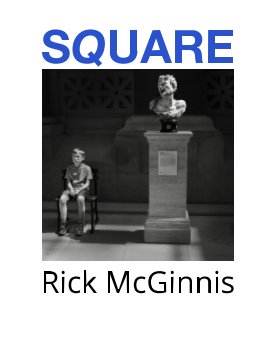
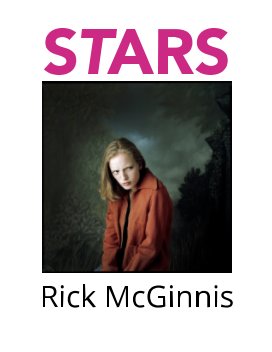
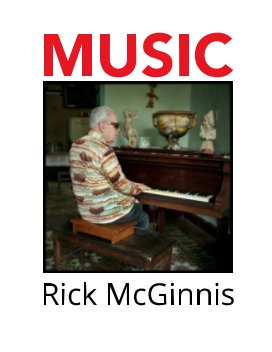
Going over my work for the last few years, I realized that the majority of my photos appeared in newsprint, a notoriously low quality, unforgiving, and impermanent product. I had always aspired to be a magazine photographer, so I felt obliged to present my work in the format I had always dreamed it would appear - high quality, semigloss magazine stock. Each book is 32 pages long, with a short introductory essay by yours truly, and devoted to one of three themes: Portraits of musicians, portraits of celebrities and movie stars, and a collection of landscapes, travel, street photography and still life work shot in my favorite aspect ratio - the square.

I'm not finished with blogging, however - I've launched a new blog devoted to new work, and I hope that anyone who's enjoyed what I've done with Some Old Pictures I Took will join me there. Thank you for your interest in this project. It has been exhausting and dispiriting and surprising and sometimes even revelatory for me; hopefully I've been able to convey some of that to you.


Music
Music
By Rick McGinnis
Photo book
Square
Square
By Rick McGinnis
Photo book
Stars
Stars
By Rick McGInnis
Photo book

Thursday, October 11, 2018

Success

Rick and camera, August 2018. Photo by Rod Orchard.

I DON'T WANT TO END THIS BLOG TALKING ABOUT FAILURE so this post is about the very positive - and unexpected - changes that have happened in the last four years. I'm not an optimist by nature; I didn't expect much to come out of this project when I opened my first box of contact sheets, or that the end of the blog, when it arrived, would come with such a mixture of relief and gratitude.

The first people I need to thank are my family, and especially my wife, Kathleen. It was her idea that I should start digging up my old work and posting it online, but I don't think even she thought it would have such an effect on our lives. She has supported and encouraged me all along the way, especially when I might have just dropped this thread and let my old work continue to languish.

Kathleen McGinnis (née Hickey), 1998.

I'd also like to thank my friends for their interest and encouragement. I have a truly varied and idiosyncratic circle of friends, a few of which I still have yet to meet outside the virtual world. Some, however, go back to college, or high school, or even to Mount Dennis, where we all grew up near the old Kodak plant. There are too many to name, of course, but I hope you know who you are if you're reading this; I've felt alone and isolated at many different times in my life, but this hasn't been one of them, and for that I'm grateful to you.


If I have to single out anyone whose support has been germane to the evolution of this project, it's my dear friends Kathy and Arnie, who generously - and very unexpectedly - gifted me the Fuji X30 camera I was planning to crowdfund over three years ago. I was becoming interested in shooting again and was looking for a small, light and high quality camera that approximated what my beloved Rolleiflex used to do, and with the X30 they gave me I found my way back to not just portrait work, but the landscapes and street photography I'd had in my mind's eye for years.

Taking pictures, July 2018. Photo by Jonathan Castellino.

I didn't imagine I was a photographer any more when I started this blog. Four and a half years later I'm able to call myself one again, partly thanks to a network of fellow photographers - the circle of peers I never really felt I had, even when I was shooting for a living, twenty years ago. There are old photographer friends like Paul Till and Rod Orchard, and new ones like Sean McCormick, Steve Stober, Vince Lupo, Gunar Roze, Franco Deleo, Mark Peavy and Stuart Forster. Jonathan Castellino has brought a sense of fellowship to the work, while my very old and dear friend Chris Buck - so often the subject of posts on this blog - has provided criticism and encouragement whenever it's been needed.

And then there are the people who commissioned so much of the work that's appeared on this blog. That list starts with Nancy Lanthier and Dave MacIntosh at Nerve magazine, who published my first, dark, dubiously focused photos. Irene Grainger, Edna Suarez, Jesse Marinoff Reyes, Peter Dako, Brad McIvor, Tim Powis, Elizabeth Grubaugh, Marianne Butler, Bob Newman, Tom McGovern, Steve Waxman, Barry Harvey, Jane Bunnett & Larry Cramer, Carol Moskot, Richard Bingham, Jodi Isenberg, Tina Costanza, Tim Shore, Derek Flack, W. Andrew Powell, Rikki Stein, Jennifer Bain, Joel Wasson, Ian Blurton, Don Pyle - some of these people are friends, some I haven't heard from since I sent them my last invoice, but they helped create the images here by giving me an assignment, and I'm grateful.

I am, of course, always looking for new names to add to that list, and I'm re-launching myself out into the business with a curious mixture of enthusiasm and trepidation. The specialty with which I made my reputation - editorial photography - seems to have declined almost to insignificance, but I remain cautiously optimistic.

This is, after all, the only thing I've ever been really good at, and it's rather pitiful to admit that it took me this long to discover the joy of shooting for the simple pleasure of creating images - something I try to do nearly every day now. It's shameful that it took me so long to realize that, in the end, the work is really its own reward, and I'm looking forward to doing as much work as I can with the time left to me.

But this isn't the end - there's one more post to come.


Tuesday, October 9, 2018

Failure

Self-portrait for passport photo, 1998

I STARTED THIS BLOG OVER FOUR YEARS AGO. Whatever I thought about the idea at the time - a make-work project to force me to go through my old pictures and post what looked interesting - it has turned out far better than I imagined it would. Which is to say that, as I began going through those first boxes of prints and contact sheets, I wasn't expecting much.

The good news was that I rediscovered photos that I'd either forgotten completely about - alarmingly, if you're the person who's relying on that memory - and gave a second, sometimes profitable life to images that would have been unseen, entombed forever in binders full of negatives or on hard drives. But I wasn't expecting that to happen when I made my first posts here.

What I was most afraid of was digging up photos that would remind me of the low points, in both my career and my life. And I knew there were a few of them. Ultimately they'd lead to writing a post that summed up thirty years of life and work, which would oblige me to be honest about my successes and failures, and especially the bad decisions I might have made. This is that post, at long last, and it hasn't been easy to write.

At the analog wall, going through contact sheets, July 2018. Photos by Jonathan Castellino.

I had no idea I'd become a photographer when I bought that first camera from a pawn shop on Church Street, and I'm still fuzzy about the precise point where I thought that I might make a career out of taking pictures. I didn't go to school for photography and I never had a clue about how you made a living from photos, but I blundered ahead regardless, fueled mostly by the energy of ascending a thrilling learning curve and making better photos all the time.

I probably wouldn't have persevered as long as I did except for two financial factors - the incredibly low overhead I maintained by living cheaply (no car, no vacations) and the low, low rent I was paying on my Parkdale studio space through the whole of the '90s. There have been at least two times in my career when I wondered whether I could call myself a photographer any more. This blog forced me to confront both of those moments, and helped dredge up a lot of painful memories besides.

Many years ago, my (now-)wife and I appeared as an item in a gossip column in Quill & Quire, a magazine about the book trade in Canada. We had been seeing each other for a while; she had been an editor there once, which is what occasioned the item, while I was described as a "very successful photographer." Even more than appearing in a gossip column in a literary magazine, I was shocked to see myself described as "successful."

Never mind that my career was entering the first of those two major crisis points at the time; the fact is that I had never seen myself as "successful" as much as "struggling." I had an idea what a successful photographer looked like (though I didn't personally know any at the time) and I knew it wasn't me. Looking back, maybe having a little bit of notoriety, an established byline and no other visible means of support was what made you a "successful" photographer in Canada. If so, it set the bar pretty low. 

Scanning and retouching, July 2018. Photos by Jonathan Castellino.

For the longest time, staying in Canada was what I considered my first big mistake. I had always intended to move to New York and try to make it there - a move that was probably inspired by my brother, who went to New York in the '60s to work for Albert Grossman, manager of Bob Dylan, The Band and Janis Joplin and many others. It was the place to be a really successful photographer - a really successful anything - in ways that Toronto obviously wasn't.

But I didn't go to New York, for a lot of reasons. The first was that I never felt like I had enough of a financial cushion to take the risk, which might have just been an excuse. The other was that, just at the point when I should have made my move, I was in no sound emotional shape for it. A really bad break-up at the turn of the '90s put me in a tailspin for years, and looking back now, I was battling depression on and off for most of the decade.

Leaving Toronto would have meant a huge financial risk, to be sure, but it also would have deprived me of most of the network of friends and family I had here - not a great place if you're slipping in and out of black moods. The advantages of staying in Toronto - low rent, friends and family, work I could (mostly) rely on - outweighed the risks of potentially making a career in a place where being "successful" paid more considerable dividends, both in money and reputation.

Basically I was afraid, and my lack of the classic middle-class safety net - living parents, a home to go back to - made that fear more acute. Fear and depression - not emotions you associate with "success," but maybe I'm wrong about that.

After a while I stopped making regular trips to New York to look for work there. I'd still get the occasional job from friends like Edna Suarez at the Times, but as it became obvious that I probably wasn't going to make the big move, the beginnings of a network of friendly venues over the border fell away. And when I left both my studio and NOW magazine near the end of the '90s my freelance network here had shrunk as well. So by the time I was described as "very successful" I was struggling to make my rent.

Goofing around in Michael Vendruscolo's studio, 1990. Photographer unknown.

I've been reading a lot of biographies of photographers, mostly to get some perspective on my own career in the business. In a recent book about the late Anglo-Irish photographer Bob Carlos Clarke, his friend and fellow photographer Crena Watson (born 1957) talks about the photo business as it was by the time Clarke died in 2006:
"It changed so much even from when I started. You used to be respected and paid properly and appreciated for your skill and knowledge. And that just suddenly went. He (Clarke) was like a god, and that was just taken away. The big budgets didn't happen any more, there were all these younger art directors who didn't know who anyone was, or what was good and what was bad. It changed so quickly - it was shocking. Nothing to do with digital, actually. When people say, 'It was digital,' that's rubbish. That's just a tool."

"It was in the early 1990s that things changed. They had the recession and stopped paying proper prices, and then they found that young people would do it. They could use someone who's not so good and then retouch after, so I suppose digital played a small part...Those changes frightened him enormously, and he could see that it would never change back. It frightened me too. I was on the cusp of the good times, but he had had the good times all his career, and then suddenly things drop, and no one knew who he was or wanted him much. Quite apart from the worry about money, you'd feel that everything you had worked for your whole life - all your skills and talent - is now nothing. And a lot of photographers commit suicide. It's quite common."
I used to think that, like Watson, I was there for the last of the "good times" in the business, but when I read this it occurred to me that, from her perspective, I was probably one of the "young people" who would "do it" for less money. What I do know is that my own specialty - editorial portraiture - was a notable part of the business when I started shooting in the '80s, that it was in steep decline by the end of the 1990s, and that when I reemerged as a freelancer in the late 2000s, it had effectively ceased to exist.

When I started this blog, I was resigned that I would end up telling a story about failure. The failure to get the work I really wanted, to create a career and a reputation, to make a living in the business. When I turned around and looked at my binders full of negatives - the "analog wall" I talked about in the first post on this blog - it reminded me of this feeling of failure, and promised a long, slow opportunity to revisit and confront my own failure, which is something everyone wants to do, right?

I could talk about bad luck, or the constantly declining state of publishing in Canada, or "digital" and the changes in how we consume media. That might do a lot to explain the context of my career in photography, but if I blamed them for my failure I'd just be making excuses. The simple fact is that I made decisions, and they led me to this point in my life.

The hardest part was separating all of this from the work. I'm the least objective critic of that work, but the pleasant surprise at the end of four and a half years of exhuming my old work is realizing that it stands up on its own, and might actually be on the way to being a body of work. I began this blog expecting to write a eulogy, and I'm finishing it with a sense of purpose I couldn't have imagined four and a half years ago.

And that renewed sense of purpose - I'm unwilling to call it a career by this point as much as a kind of vocation - will be the subject my penultimate post.


Thursday, September 6, 2018

Colm Feore and the Lay-Off

Colm Feore, Toronto, Jan. 27, 2009

THESE WERE THE LAST PORTRAITS I DID FOR THE FREE DAILY. I didn't know they were, but I must have had some idea that my days were numbered, because I had started looking around for a new job at the time. I didn't want to get surprised; other newsroom staffers had been planning or making exits at the time and it seemed the more dignified way of leaving. But that's not what happened.

As I mentioned in an earlier post, fellow staff writer and photographer Chris Atchison had already left and I was taking up the slack, doing interviews and photo shoots. Colm Feore was in town promoting his role on the latest season of 24, as the husband of the first (fictional) female U.S. president. We did a lot of coverage of 24 back then - it was a monster hit and probably one of the last must-see series produced by a U.S. network.

Colm Feore, Toronto, Jan. 27, 2009

What I remember most about the shoot was that Feore didn't seem terribly interested in talking about his role on 24. Michael Ignatieff, an esteemed writer and academic, had recently been made interim leader of the Liberal Party of Canada - then the official opposition - and would soon be elected its leader. Feore was incredibly excited about him. He spent much of the interview and shoot talking about how fortunate Canada was to be able to vote for a real intellectual as its leader.

Feore had made his reputation in Canada playing legendary figures like pianist Glenn Gould and Pierre Elliot Trudeau - longtime prime minister and father of our current PM - and I suppose he felt his opinion about who should lead the country was important. Mostly, though, he reminded me of another actor, Ted Danson, at a movie junket I'd been to in Santa Monica a year previous. Danson also didn't want to talk about the movie he was promoting as much as his friend, Hillary Clinton. If only we could sit down for a beer with Hillary, he told us - we'd know how great she was and why we needed to vote for her. That most of the table at the junket were foreign journalists didn't seem to register with Danson.

In any case, Michael Ignatieff's only election as head of the Liberals didn't work out so well. In 2011 the party - unofficially known as "Canada's Natural Governing Party" - came third in the polls, losing its status as the official opposition. Ignatieff himself lost his seat in parliament. As subsequent events have proved, Canada does not want an intellectual for a leader.

The Feore portraits are alright, I guess. They're stark and simple and part of the new direction my portrait work had started going since I'd been coaxed back into shooting by Jodi Isenberg at the free daily five years previous. It seems suitable that they were shot at the old Four Seasons in Yorkville; I'd done so much work in its rooms since the '90s, and I'd always appreciated the big, bright windows that looked north and west over the city. It wouldn't be long for the world - the hotel would close three years later and move two blocks east to a new building.

________________________

I WAS LAID OFF BY THE FREE DAILY on the morning of February 10, 2009, two weeks after I'd done the Colm Feore shoot. I had come in late that day - I had a job interview at the Toronto Star for the Queen's Park reporter position, though of course no one at the office knew that. Our new editor had insisted that I be in the office that day for a meeting, and I followed her all the way to the door of the publisher's office before I spotted Glen, our managing editor, out of the corner of my eye, being escorted out of the building with a box of his stuff. The shoe dropped just as she opened the door and I saw that the assistant publisher and our union rep were already waiting inside.

I'd been sandbagged. The editor said something about a "new direction" for the paper - one that required laying off all the writers (plus the managing editor.) We have called a cab for you. Don't return to your desk - its contents will be packed up and sent to you. They were about to take away my cellphone when I pulled it out to call my wife and I had to remind them that the phone was mine.

If I'm honest, once the anger and humiliation had passed I was grateful. The free daily hadn't been much fun to work for since Bill, the new publisher had taken over, and definitely since Jodi had been fired as editor-in-chief. Jodi was my friend, and almost anything positive that came from my time at the free daily had been because of her decisions and support. Even before she moved into the editor's chair, she had been a big supporter of making me the paper's senior writer after my contract as interim photo editor ended. It's hard to say definitively, but I might not have found my way back to photography today if Jodi hadn't asked me to go back to work nearly fifteen years ago.

At the Four Seasons Yorkville Avenue Bar photo show, Sept. 2007. Photo by Chris Atchison.

My first reaction when I realized what was coming in the publisher's office on that February morning was anger. I am not a team player by nature - another one of Jodi's great gifts was letting me work from home instead of holding down a desk in the office up in Don Mills, a 90-minute commute each way. (One of the first things the new editor did was to enforce an edict from the publisher ordering all the writers back to a desk in the office. I think he'd seen All The President's Men too many times and wanted to preside over a bustling newsroom. As anyone who's worked in one can tell you, newsrooms don't bustle.)

But there was a sense of camaraderie among the staff at the free daily; it developed slowly under P.J., our first editor, and really flourished when Jodi took over. I had worked harder for the paper than I thought myself capable, writing daily and weekly columns, reviews, interviews and features in addition to taking pictures. I had turned a daily TV column that I was only supposed to write for a week when someone else was on vacation and made it something more than just rewritten press releases and gossip cribbed from entertainment websites. When Jodi gave me the job I told her up front that I didn't really watch much TV because I didn't like it that much. I ended up writing over 1,100 daily columns.

I had invested more into working for the free daily than I had put into any job I'd had, and being laid off felt like a betrayal as much as a loss of income. (The wages at the paper were well below what any other paper in the city paid. I remember describing my workload to a friend who was an editor at the Globe & Mail; he told me that he had people who were paid twice as much to produce a third of my work.)

Sometimes it didn't seem like management really wanted to acknowledge our successes. Before he left, Chris had talked to the people at the Four Seasons, who said they'd be interested in putting on a show of our movie star portraits in the hotel's Avenue Bar during the film festival. It was a really big deal - an opportunity I wouldn't have dreamed of when I was a freelancer. He took the proposal to the publisher, who turned it down before Jodi talked him into changing his mind. But they didn't want to spend any money, so Chris and I ran around trying to get deals on printing and framing with just a week or two before the show was supposed to open.

The show happened, but the paper said they didn't want to spend any money on promotion or an opening reception, so it all came off like a wasted opportunity - a damp squib. No wonder I look so miserable in the photo Chris took for the story the paper ran - the only publicity our show ever got. Another reason why I have no enthusiasm for gallery shows any more.

Shooting an AK-47 for a James Bond story, Oct. 2008. Photo by Frank Monozlai.

It took the paper quite a few months to find a replacement for Jodi after they forced her out. They ended up hiring exactly the sort of person I was afraid they would - the Respected Industry Professional, complete with J-School teaching gig and a network of fellow professionals at her fingertips. Exactly the sort of person who hadn't built up the free daily from a start-up run out of a hotel room into a national chain of free dailies.

The free daily was no New York Times, and that was its great virtue. In an age of falling readership and failing confidence in the news media, Jodi had figured out that people wanted something light and entertaining to read on their commutes to work, and had delivered, filling the paper with TV and movie stories and unconventional personalities like Enza Anderson, a local trans celebrity who had run for mayor as Enza Supermodel and turned out to be one of the most professional writers I'd ever worked with.

Jodi knew who our demographic was, and delivered content to them without pandering. So my heart sank when the new editor took over and drove up in what I've come to call the Annex Clown Car. First she began canceling all the features that readers liked - TV recaps, movie and celebrity coverage, shopping and gift guides and, ultimately, much of what we produced in-house. Then she enlisted friends of hers - more Respected Industry Professionals - to write editorials and introduce politics into the paper.

It was an awful mistake. Politics - the hectoring, biased, often sneering op-ed political content that the news media has decided to favour since the budgets and staff that once researched features and covered beats were gutted from newsrooms. Jodi had made the free daily a success by avoiding it, and had made the paper grow as a result. It was one of the great errors of the passengers in the Annex Clown Car that their names and reputations attracted readers, and the new editor was intent on making the free daily resemble all the other failing papers and their op-ed shape-throwing. But falling readership at the big dailies was proof that the opposite was true, and nothing that's happened in the decade since I was laid off has reversed the trend.

It was, in all likelihood, time for me to go anyway, but I'm not grateful for the push out the door. I wouldn't be the last to go; in the months that followed there was an exodus of staff, and almost exactly a year later the new editor was fired, followed by Bill, the publisher. The free daily still exists and its competitors are all gone, but the name has been changed and it barely resembles the paper I worked on with Jodi, Tina, Jonathan, Fermin, Chris, Nate, Liban, Jen, Brian, Sarah, Saleem, Kasia, Steph, Mike, Christine and everyone else who I annoyed constantly when they were forced to share a newsroom with me.


Monday, September 3, 2018

Village Voice

Voivod, Montreal, December 1989

THE VILLAGE VOICE IS DEAD. If you've never read, or even heard of the Village Voice, I doubt that you care; one more newspaper gone in an age when newspapers go out of business every month. Even for people who care, it's hardly news - for fans or readers or former employees the paper essentially died last year when it ceased print publication and went completely online.

My first proper assignment for the Voice was nearly thirty years ago, when photo editor Edna Suarez phoned me and asked if it would be too much trouble to hop up to Montreal to shoot the Quebec prog metal band Voivod for the paper's next Rock & Roll Quarterly supplement. I'm not sure Edna was aware of the distances involved getting from place to place in Canada, and even before I did the math in my head I knew that whatever I made probably wouldn't cover the cost of a return ticket on the overnight train.

But I didn't mention that and of course I said yes. This was my first real gig shooting for an American publication and I couldn't blow it, so I packed nearly my whole studio - my ProFoto strobe kid and light stands and two cameras - and hauled it all down to Union Station and onto the VIA Rail train. I arrived in Montreal the morning after a blizzard and went upstairs from the Gare Central to the Queen Elizabeth Hotel for breakfast, stowing all my gear by the wall next to my table in the fancy restaurant across from the Marie, Reine du Monde Cathedral, where I waited for the band's manager to meet me. The cost of breakfast ate up the last of whatever I'd make from the shoot.

Aki Kaurismaki, Toronto, Sept. 1988

I think I sold my first photo to the Voice nearly two years earlier. Preparing for his big move to New York, my friend Chris Buck had already started doing work for them, and he arranged for me to send the Voice a print of my shoot with Finnish director Aki Kaurismaki (a big deal at the time, at least in film fest circles) on spec. They might have used it, but I can't be sure; I've never been good at keeping tearsheets, so what got sent and what got printed is sometimes hard to match up.

Another big assignment for the Voice was one of the only examples of sports photography I've ever done. Canadian sprinter Ben Johnson had been a gold medalist at the 1988 Seoul Olympics, but had the medal taken away when he tested positive for performance enhancing drugs. He attempted a comeback three years later, which began at the Hamilton Indoor Games. Edna called me up and asked if I'd do the shoot. I had never shot a sporting event and knew I'd have to rent something like a 300mm/2.8 lens to pull it off, but of course I said yes.

Ben Johnson, Hamilton, 1991

I only remember a couple of things about the shoot. The first was Johnson's visible disappointment when he learned that he'd finished second, which I was lucky enough to capture in a few barely-sharp frames. (I actually think the slight camera shake enhances the shot of that heartbreaking moment, and in any case strict focus and sharpness is overrated.) The other was a phone call from Edna.

I was working with a local writer on the gig - a friend I'd known for a few years. A few days before the Hamilton track meet Edna called me to firm up details, then said "I thought you said the writer was a friend of yours." I insisted that he was, but Edna told me that he'd been calling the paper trying to get me taken off the job so his sister could shoot Johnson.

"Of course I said no," Edna told me.

I never said anything about it to him, not in the car there and back to Hamilton, and not in the decades since, but I don't think I was ever able to trust him again. It was a sobering moment for me - the  first time I realized that loyalty is situational for many people.

James Tenney, Toronto, January 1989
Ice Cube, Toronto, 1990
Sonic Youth, Montreal, 1991
William S. Burroughs, Toronto, 1991

Much of the work I sold to the Voice was reprints - portraits from my files bought to illustrate stories. I could see why they might turn to me for a portrait of James Tenney - an American composer who lived in Toronto and taught at York University. What I never understood was why the Village Voice would have needed my pictures of a New York band like Sonic Youth, or someone like the writer William S. Burroughs, who must have been photographed by the Voice countless times since the paper was founded in 1955.

I liked to think it was because my shots were good, but I was probably flattering myself. In retrospect, it might have been because they were different - nobody in New York or the U.S. had seen them since they'd appeared in whatever publication assigned them up here. Getting assignments to shoot for U.S. media like the Voice was difficult in Canada - almost anyone would either live or perform or do something in New York City before they'd show up in Toronto. But work done up here at least had the advantage in the pre-internet age of being obscure and unseen by art directors and photo editors in Manhattan.

Joe Kramer, Toronto, 1991

This shoot with gay erotic massage therapist (and former Jesuit seminarian) Joe Kramer is a pretty good example of the sort of work I might get assigned by the Voice. It's really the kind of subject anyone who shot for an alternative weekly might find themselves shooting back in the '80s and '90s. I'd photographed people like Kramer for NOW - no surprise since the alternative weekly probably wouldn't exist if there was no Village Voice.

I don't know when I started reading the Voice - probably since before I owned a camera. I know that I bought it religiously every week for over a decade, which is why this shot of Joe Kramer is of a piece with the kind of work the Voice printed. It's not too different from something James Hamilton might have shot at around the same time - a piece of mimicry, for a client I desperately wanted to impress.

Vikram Seth, Toronto, May 1993

The last assignment I ever did for the Voice were portraits of the writer Vikram Seth. By this point Edna Suarez had moved on to the New York Times and Tom McDonough was photo editor. I don't know why I never got another shoot from the Voice, but it's not surprising - I was no longer making trips to New York City with my portfolio to push my work and I never had the same personal connection with Tom that I had with Edna.

My Voice connection was probably the key to whatever success I had outside Canada; when Edna moved to the Times she assigned me whatever work she had that could be done here. It was through Edna that I met art directors Robert Newman and Jesse Reyes, who were responsible for assignments I got for outlets like Guitar World and Entertainment Weekly. The brutal truth is that, despite the size and competition, people in New York publishing were far more helpful and friendly than almost anyone in Toronto, which helped keep the illusion alive that I might one day have a career down there - at least for a while.

Vikram Seth might have been my last Voice assignment, but he was not the last portrait of mine published by the Voice. Late last year, after the last print edition of the paper had hit the newsstands, the Voice website ran a story about the new Fela Kuti box set featuring my 1989 portrait of Fela from the cover of the booklet. They obviously got the shot as a handout, so I didn't see money for it (though I was, thankfully, credited.)

Ironically, it was Chris Buck who told me about the photo being used, three decades after he got me my introduction to the paper. Ultimately, this is my only tearsheet from the Voice.


Thursday, July 19, 2018

Four Years

Self-portrait in an elevator, Art Gallery of Ontario, 2017

THIS BLOG IS FOUR YEARS OLD TODAY. If everything goes according to plan in the next few weeks, there won't be a fifth anniversary. I am running out of old photos to post and, if I'm perfectly honest, getting tired of talking about old work instead of making new work. But it's all good, and I find myself in a much better place than I was when I put up my first post here, four years ago.

On the first anniversary of the blog, I decided to feature some of the by-products the blog had produced, which ended up involving reprinted work that appeared in books and on CDs, and even in The New Yorker magazine. After a while, I started to hope that more new work would get out there than just reprints of old shoots, and with the end of this blog in sight, this has become my goal.


I wanted to talk about this in my last anniversary post but it was still in the works at the time. It turns out that my shoot with Fela Kuti when he came to town for a concert in 1989 - done on my own, without any client and unpublished until I started this blog - had some value after all, and getting my "lost" shoots out into the world had been a big reason to start the blog in the first place.

The blog post found its way to Rikki Stein, Fela's manager, and we began talks about featuring them in the fourth volume of a box set edition of Fela's LPs. Previous volumes had been curated by Brian Eno, Questlove and Ginger Baker; this one would be curated by Erykah Badu. As a huge Fela fan, this was a privilege I couldn't have imagined for all the years I basically sat on the shoot.

My photos ended up all over the big 12" booklet that comes with the box. The cover shot of Fela glaring at me past his cigarette (or was it a joint?) was one I'd never printed before, and I think it has a lot of impact. The rest of the book features live photos and sequences from the portrait shoot contact sheets, all displayed as big and beautiful as I'd always imagined seeing my work, and thanks to the "vinyl revival" my work is featured on a scale I never saw in the age of the CD.


Another big market for reprints of my old work has been documentaries, and the past year saw two or three films feature my photos. There was a documentary about a Canadian music industry figure (which I've never seen) and a French TV documentary about Depeche Mode that bought the rights to use one of my portraits of photographer Anton Corbijn, who had a big hand in creating the band's visual image. (I've also never seen that.)


Most exciting of all, though, was Right Here, a documentary about the Go-Betweens, made for Australian television. This was another shoot I did without a client, and which had never been seen until I posted the photos on this blog. It turns out I captured the band at a crucial time in their very fractious history; I'm a fan of the group, so it feels good to play at least a tiny part in telling their story.


I've frequently gotten requests from people and organizations to use my work for free. I tend to say no, but mostly because people go about asking the wrong way. The truth is that I'm happy to let someone use an image without payment, provided they promise that they'll use it respectfully, that they'll credit me prominently and try to link back to my website or this blog - and that they ask nicely.

In the first year of this blog, an artist did a very nice drawing based on one of my photos of guitarist Rowland S. Howard. I was flattered, and posted her artwork on the first anniversary of the blog. Earlier this year, California designer and teacher Edgar Garcia reached out to me to ask about using my portrait of rapper Ice Cube as part of a series of illustrations he was doing on old school rappers. He asked nicely, I liked what he was doing, and here's the result.


Richard McGrath is a designer, and the proprietor of the Terminal Press, who has been trying for several years to get permission to use my J.G. Ballard photos, which until I posted them here hadn't been seen by anyone since (I think) they were printed by Nerve magazine back in the '80s.

McGrath is a huge Ballard fan who has been putting together and publishing Deep Ends, a hardcover compilation of Ballard material for several years. It took a while, but my photos - and the text of my blog post - ended up in the latest volume of Deep Ends. It all looks pretty great, and it's nice to get these shots out in front of people who want to see them - using the sort of digital custom printing technology that I couldn't have dreamed about back when I took the shots.


Around two years ago Joel Wasson - an old friend of my wife and I from the city's music scene - contacted me about doing photos of his new band. Joel had gone through a rough divorce and had done something amazing to help move forward by forming a punk rock band with two of his sons. I shot promo photos that ended up on their first LP, and not long after Joel came back and asked if I'd do the next record.

He described his concept - "See no evil, hear no evil, speak no evil," basically - and I worked out a way to execute it with a small, improvised studio set-up in my living room, a composite of separate photos and a lot of digital editing. It turned out to be one of my favorite album covers of all the ones I've done, made more special by being one of the few realized on a full-sized 12" LP jacket.


Just as exciting was seeing the LP design on a t-shirt, only the second time (that I know of) where my photos have ended up on a t-shirt. Mostly, though, it's been nice to have the support of people I've known for years from the local music scene, like Joel and Ian Blurton. I've quietly put it out that I'm offering a special "friends and family" discount for old scene friends like Joel and Ian - a low, low price for a shoot, with the proviso that I can mostly do what I want, though any kind of collaboration is appreciated.

Long Branch, Toronto, Jan. 2018

This offer got out to some more old friends in another local band, Long Branch. My connection is mostly with the rhythm section - bassist Sally Lee is my old roommate from the Parkdale loft, and drummer Don Pyle was our upstairs neighbour (and is now my barber.) They needed promo shots for their next record, so one wintry January day we met at Don's house and did a couple of setups inside before heading out into the snow.

I'm particularly fond of the shot above, which has the simplicity I always wanted in band photos. But even more, I was flattered that they asked, and grateful to be doing new work. Which is the point I'm at now, running out of old photos and eager to make new ones - an outcome I would have considered far too optimistic when I put up my first post here four years ago.


Thursday, June 21, 2018

Summer

Summer (after Hoyningen-Huene), Parkdale, 1994

TODAY IS THE FIRST DAY OF SUMMER. With that in mind, I'm posting this photo, which I scanned ages ago and have been waiting - and forgetting - to post when the time was right. With the end of this blog in sight, it feels like it's now or never.

I shot this for the cover of NOW magazine's annual Hot Summer Guide, the year after I'd taken over the whole of my Parkdale loft and had a dedicated, full-time studio space. This was precisely the sort of work I'd always dreamed of doing, and when Irene, NOW's photo editor, assigned me the job, I knew exactly what I wanted to do.

I'd had this iconic George Hoyningen-Huene photo bookmarked for years, and I'd studied it constantly. What I did know was that it wasn't shot on the terrace of a hotel on the Riviera, but on a balustrade on the roof of Vogue magazine's Paris offices, with the photographer's protege (and lover) Horst P. Horst and a model wearing Izod bathing suits.

Divers, George Hoyningen-Huene, 1930

My challenge was shooting it in the studio, and not in the full sunlight that Hoyningen-Huene had used. I decided to take a few liberties and update the photo to somewhere in postwar North America - my favorite time and place - and shoot it with cross-processed colour slide film. I rented my favorite clouds and sky backdrop from Vistek and went shopping for old pop bottles and did a few tests until I was sure I'd nailed the light.

For models I chose the best-looking couple I knew at the time - Sloan drummer Andrew Scott and his girlfriend (later wife), actress Fiona Highet, two recent transplants to Toronto from Halifax. Fiona had a suitable vintage bathing suit, they understood exactly what I was trying to accomplish and took their places on my old weathered barn board table top perfectly. After a coupe of Polaroids and a roll of film I knew I'd nailed the shot to the best of my current ability. (In retrospect, I wish I'd taken a roll of black and white.)

Unfortunately, I decided to take a couple of extra setups just in case - prudence always being as much a vice as a virtue with me. They were much more "fun" and conventional, and I don't think anyone who's worked as a magazine photographer will be surprised that, in the end, the paper went with one of the "just in case" shots instead of my meticulously planned homage to Hoyningen-Huene.

THAT is a mistake I will never make again.


Friday, March 23, 2018

Funeral Home

Steven Duquette, funeral director, Bates & Dodds Funeral Home, Toronto, 2000

EVERYBODY IS FASCINATED BY DEATH. At the turn of the millennium everyone was reading Boom Bust & Echo, one of those applied big ideas books, like Freakonomics or The Tipping Point, that seemed to explain nearly everything in one easy-to-grasp conceit. The big idea in Boom, Bust & Echo was that demographics were the key, and that if you wanted to predict the future or make a lot of money, all you had to do was figure out the largest number of people who were going to be in school, buying homes, having kids, retiring or dying.

I was particularly taken by the last point, and for years I'd tried to sell editors on a story about young people entering the funeral business, anticipating the massive boom that would commence as soon as the baby boomer generation started dying off. I was also interested in how the funeral industry, one presumed to be basically conservative in nature, would handle the demands of a demographic who were used to getting what they'd wanted their whole lives, and who had led massive social and cultural changes based on that combination of demands and numbers.

Stanley Chung & Steven Duquette, Bates & Dodds Funeral Home, Toronto, 2000

At what I perceived to be a critical point in my career, Saturday Night magazine bit at my story pitch, and I spent most of 2000 following around Steven Duquette and Stanley Chung, the proprietors of Bates & Dodds, a small, independent funeral home - the oldest operating one in the city - with a very interesting location, on Toronto's Queen West shopping district and across from the gentrifying streets around Trinity Bellwoods Park.

Steven and Stanley were very gracious with their time, and let me document their work with my cameras - provided I dress like them in a somber black suit and expressly request permission wherever I went. Steven, young and articulate, would be the focus of the story, and I shot portraits of him in the casket sales room at the funeral home and sitting on his Honda Shadow by the rear garage door where they took delivery of flowers, coffins and bodies.

Steven Duquette, funeral director, Bates & Dodds Funeral Home, Toronto, 2000

One of the first things I learned was that being a mortician involved an awful lot of paperwork, to comply with the almost infinite number of regulations that applied to the funeral business. I was desperate to get them to talk about the abiding myths and preconceptions about their profession, and to wax philosophical about the nature of what they did, dealing with one of life's most profound and - to most people - terrifying absolutes.

They were remarkably casual and offhanded about it all, as were the many undertakers, young and old, who I interviewed for the piece, as I tried to create a compelling and resonant story for the magazine. I spent most of the year reading, researching, and spending time with the men from Bates & Dodds, accompanying Stanley on a Buddhist funeral one sunny day, and killing time (no pun intended) with Steven in the queue at St. James Crematorium, waiting for our turn to commit a body to the flames.

Stanley Chung & Steven Duquette, funeral directors Toronto, 2000

I shot a lot of film, did hours of interviews and took a lot of notes. This was the sort of story I thought I was uniquely suited for, as a writer and photographer; with every new draft and conversation with my editor, I imagined how it might look in the glossy pages of the venerable - over a century in print! - and award-winning publication. I was a devoted magazine reader, and at one point read over thirty a month, though most of my career had been spent working for newsprint publications. I was desperate for a change, and this story potentially showcased the best of what I did.

It was hard not to be fascinated by the more morbid aspects of the funeral business, and Stanley and Steven let me spend a lot of time and a few rolls of films shooting in their embalming room. But even more poignant was a dusty cabinet in a storeroom next to their office, where they kept cremains - cremated ashes - that had never been picked up after funeral services were bought and paid for. Some of these packages had been there for decades.

One dusty box, the earthly remains of Isobel MacFarlane, had been unclaimed since 1968. The label was from the (now-closed) crematorium at Prospect Cemetery. Today I live in a house right next to Prospect, and as I write this I can look out my office window over the wall of the cemetery to its veteran's plot and cenotaph. In retrospect, perhaps not everyone is as fascinated by death as I am.

Bates & Dodds Funeral Home. Toronto, 2000

There were so many stories I could have written about Steven and Stanley, Bates & Dodds and the funeral business, but in the end I didn't write any of them. I'd hand in several revisions of my story, even more unsure every time as to what my editor was looking for. He was young, and from Montreal - a detail he never tired of pointing out - and seemed to want to spend more time at our meetings way up in Don Mills talking about music and music journalism. (A job and a world that I was desperate to leave behind in my past.)

Saturday Night was one of only two or three national general interest magazines in Canada, with a long history and a reputation that made it like a combination of the New Yorker, the Saturday Evening Post, Harper's and The Atlantic all rolled into one - a role that fell to it mostly because Canada is a big country with a very small publishing market, and barely able, even when publishing was healthy, to support four magazines when one would do.

The magazine was in trouble, however. Under a previous owner, I'd tried in vain to get a friend of my fiancee who worked as an editor there to assign me a story. We'd spend endless phone calls talking through pitches and getting one after another tantalizingly close to an assignment letter before they'd be shot down at one of their many editorial meetings.

Now under new management as a free weekend magazine distributed through the National Post, it seemed that even getting the assignment was no guarantee that I might ever see the story in print. I began thinking that Saturday Night was in the journalism business much as Hollywood made movies, with the majority of the effort expended in its offices and boardrooms devoted to preventing anything from getting published or filmed.

My editor, maddeningly vague the whole time, had me change the focus at least twice before telling me one day that they were thinking of running it as a photo essay. I went up to the office for one more meeting where I'd talk with the photo editor.

We had a mutual friend in my buddy Chris, and while I hoped that might have worked in my favour, our brief, largely wordless meeting mostly involved her glaring at me with what I can only recall as barely concealed hostility. I returned home upset and confused. This was not going at all well. One final phone call with my editor revolved around the question - mostly posed by me, expecting an answer for some reason - of whether they intended to run my story at all. The answer wasn't positive, and I was told to send in an invoice for a kill fee.

Saturday Night would be sold two more times. It went bimonthly and returned to the newsstands before the final owner ceased print publication in November of 2005, after one hundred and eighteen years. It briefly came to life again in 2008 as a blog, but was abandoned after five posts. The photo editor who seemed to hate me for some mysterious reason left publishing to run an artisanal food business. Bates & Dodds Funeral Home closed its doors a few years ago. The building is now a veterinary business.

Bates & Dodds Funeral Home. Toronto, 2000